Observation
The surrounding world is the source of the paintings: people, contemporary events, nature, animals, objects and places.
About the artist
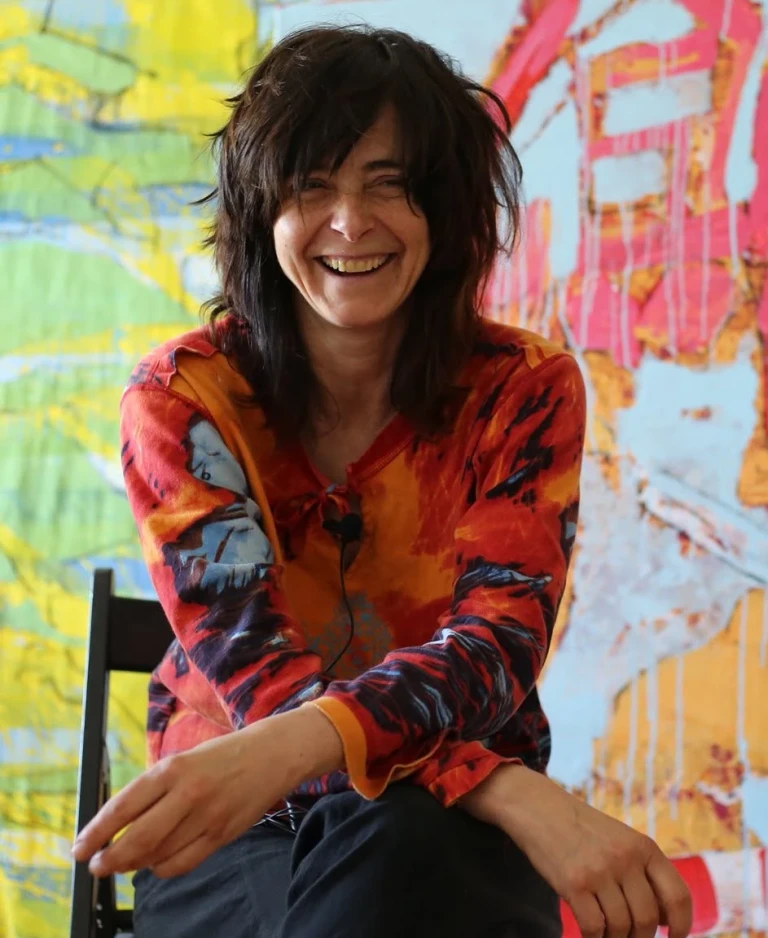
Polish painter and visual artist whose practice brings together observation of reality, expressive painterly gesture and the use of unconventional materials as integral elements of the painting.
Education and award
1996 - Jan Matejko Academy of Fine Arts in Kraków.
Diploma in the easel painting studio of Prof. Jan Szancenbach.
Additional diploma project in the book design and typography studio of Prof. Roman Banaszewski.
1997 - Second Prize, Konfrontacje Najmłodszych Artystów Krakowa, Myślenice.
Biography
Monika Ślósarczyk (born 1971 in Bielsko-Biała, Poland) is a Polish painter and visual artist. She lives and works in Cieszyn Silesia. Alongside easel painting, she also creates work in architectural settings. Her practice combines observation of reality, painterly gesture and engagement with the material substance of the painting.
The range of subjects she addresses is broad. Her work includes people, animals, still lifes, landscapes, architecture and scenes responding to current events and social change. The paintings may comment on the human condition and humanity, while an equally important impulse may come from a fleeting arrangement of light, a gesture, the form of an object or the intensity of nature.
The coherence of her work stems from a distinctive way of observing and transforming reality. Ślósarczyk does not seek to reproduce an observed scene faithfully. Reality becomes her starting point, transformed through colour, movement, deformation, formal reduction and physical engagement with the surface.
The artist works in oil, acrylic and mixed media. In her own method, she incorporates selected materials not traditionally associated with painting into the surface, including printed paper, sand, earth, spent coffee grounds and metal leaf. Each selection responds to the needs of a particular painting.
Ślósarczyk graduated from the Jan Matejko Academy of Fine Arts in Kraków. She completed her diploma in 1996 in the easel painting studio of Professor Jan Szancenbach, with an additional diploma project in the book design and typography studio of Professor Roman Banaszewski. In 1997, she received Second Prize in the Konfrontacje Najmłodszych Artystów Krakowa competition in Myślenice.
Since the mid-1990s, she has presented her work in Poland and internationally. Her career includes more than 200 solo and group exhibitions. Selected presentations have taken place at the Polish Baltic Philharmonic in Gdańsk, the Palace of Art in Kraków, the Museum of Magic Realism in Wisła, Tichauer Art Gallery in Tychy, Zámeček Petrovice in the Czech Republic and Rzeszowski Dom Sztuki.
Her body of work also includes murals, frescoes, mosaics, stucco work, bas-reliefs, interior design projects, land art activities and works in public space.
The materials used in Monika Ślósarczyk’s work do not form a fixed set; each selection responds to the needs of a particular painting. The starting point may be raw or printed canvas, fragments of newspaper or another material chosen for its texture and colour. The artist works with a range of tools: brushes, palette knives and sometimes even a broom. She applies, pours or sprays paint, using a stream of air to direct the way it spreads. Spent coffee grounds, sand, earth and metal leaf can build up an uneven surface, alter its colour and affect the way it reflects light. The choice of materials and tools is determined by the needs of each painting, so not all of them appear in every work.
Practice
The practice is not organised around a single motif. Its coherence comes from a method of working, a way of observing and a consistent transformation of reality.
The surrounding world is the source of the paintings: people, contemporary events, nature, animals, objects and places.
Some works respond to current affairs and questions concerning the human condition without imposing a single closed reading.
A line, a sweep of paint or a rapid mark retains the physical energy of making and gives the composition its rhythm.
Canvas, newspaper, earth, sand and spent coffee grounds can bring their own structures into a work. They are active elements of the composition, not decoration.
Colour shapes atmosphere, tension and the emotional temperature of an image. Light can transform an ordinary place into an intense visual experience.
The practice is not organised around a single motif. Its coherence comes from a method of observing and transforming reality.
More than three decades of exhibition practice
Monika Ślósarczyk’s practice also includes work in architectural settings, projects in public space and writing on art. Her experience of scale, surface and interior space remains an important context for her painting.